In a groundbreaking achievement that sounds like it’s straight out of Jurassic Park, scientists have successfully brought back the legendary dire wolf (Aenocyon dirus) from extinction—10,000 years after the species vanished from Earth. This historic milestone marks the first time a prehistoric carnivore has been resurrected using advanced genetic engineering techniques.
The Resurrection of an Ice Age Icon
Dire wolves, immortalized in popular culture by Game of Thrones, were once apex predators that roamed North America during the Pleistocene epoch. Larger and more robust than modern gray wolves, these formidable hunters weighed up to 150 pounds and possessed bone-crushing jaws capable of taking down massive prey like bison and horses.
Despite their fame, dire wolves disappeared around 10,000 years ago, likely due to climate change and competition with other predators. But now, thanks to de-extinction science, they have been given a second chance.
How Were Dire Wolves Brought Back?
The project, led by a team of geneticists and paleobiologists, utilized CRISPR gene-editing technology to reconstruct the dire wolf’s genome. By extracting ancient DNA from well-preserved fossils and comparing it to the DNA of modern wolves, researchers identified key genetic differences.
Using stem cell cloning and synthetic biology, scientists were able to implant a modified embryo into a closely related surrogate—a process similar to how the first cloned mammal, Dolly the sheep, was created. After multiple attempts, a healthy dire wolf pup was born, marking a historic moment in de-extinction science.
Ethical and Ecological Concerns
While the scientific achievement is monumental, it has sparked debate among conservationists. Critics argue that reintroducing an extinct predator could disrupt modern ecosystems, while others question whether resources should instead be focused on saving currently endangered species.
Proponents, however, believe that resurrecting the dire wolf could provide valuable insights into evolutionary biology and even help restore balance to certain ecosystems where large predators are now missing.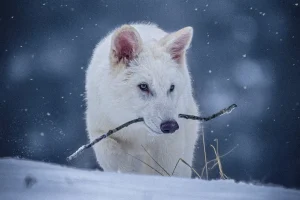
What’s Next for the Resurrected Dire Wolves?
The first successfully cloned dire wolf is currently under close observation in a controlled research facility. Scientists are studying its behavior, physiology, and adaptability to determine whether future generations could eventually be reintroduced into the wild.
If all goes well, we may one day witness dire wolves roaming North America once again—a true testament to the power of modern science and humanity’s quest to reverse the mistakes of the past.
Would you want to see dire wolves back in the wild, or is this a step too far? Let us know your thoughts!