
Deadly Nightshade (Atropa belladonna), infamous for its lethal toxicity, has a dark history intertwined with poisonings, witchcraft, and even Renaissance beauty rituals. Despite its deadly nature, it has also played a role in both ancient and modern medicine due to its potent compounds. This enigmatic plant demands extreme caution—handling it requires strict safety measures to avoid its fatal effects.
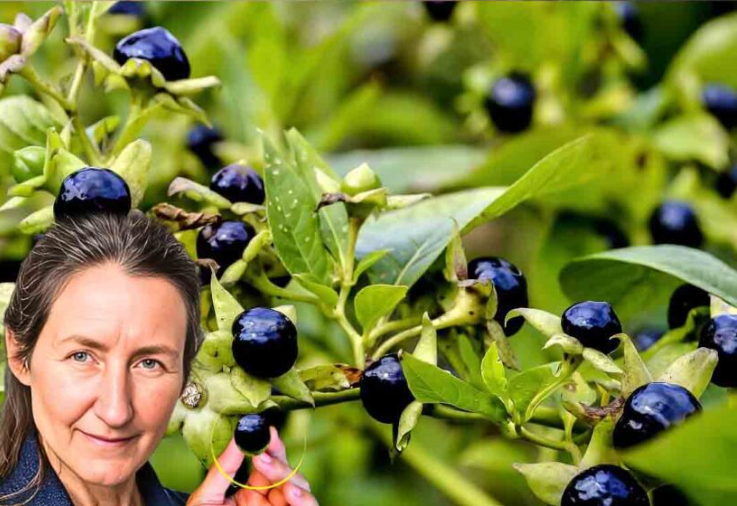
What is Deadly Nightshade?
**Atropa belladonna**, or Deadly Nightshade, is a toxic perennial from the Solanaceae family, related to tomatoes and potatoes. Native to Europe, North Africa, and Western Asia, it features purple bell-shaped flowers, glossy black berries, and dark green leaves. Despite its striking appearance, every part of this plant is highly poisonous.
**Beware its beauty—Deadly Nightshade’s leaves, berries, and roots harbor lethal alkaloids.** Though visually striking, its toxicity has woven a sinister legacy through centuries. This deceptive plant serves as a deadly reminder that danger often comes in alluring forms.
Toxic Components of Deadly Nightshade
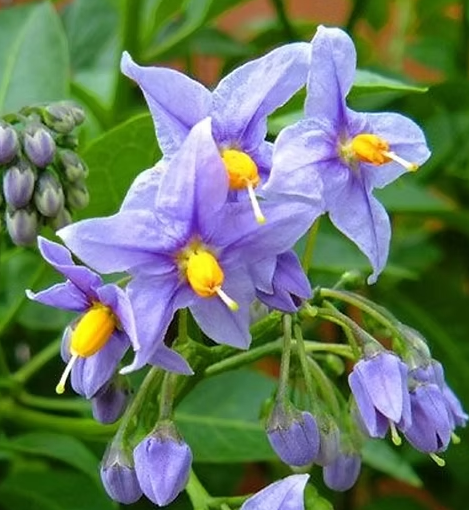
Deadly Nightshade’s lethal power comes from three potent alkaloids: atropine, scopolamine, and hyoscyamine. These compounds hijack the nervous system, triggering symptoms like blurred vision, hallucinations, and potentially fatal paralysis. Even small doses can be deadly, making this beautiful plant one of nature’s most dangerous pharmacological traps.
Atropine: Deadly Nightshade’s toxins attack the nervous system with terrifying efficiency. Even small doses trigger alarming symptoms—dilated pupils, violent hallucinations, racing heartbeats, and muscle paralysis. In higher amounts, these compounds shut down vital functions, turning the plant’s sweet-looking berries into a potentially fatal trap.
Scopolamine: Scopolamine, Deadly Nightshade’s most sinister alkaloid, has a chilling dual legacy—as both a poison and a sedative. This potent compound doesn’t just dull the senses; it hijacks consciousness itself, plunging victims into disorienting hallucinations and terrifying mental voids. History reveals its dark versatility—from assassins’ weapon to medieval “truth serums”—proving that nature’s chemistry can be as cruel as it is clever.
Hyoscyamine: Scopolamine disrupts nerve signaling with deadly precision, where overdoses can swiftly turn fatal. This potent neurotoxin blurs the line between medicine and poison—a single miscalculation in dosage proves lethal.
Deadly Nightshade’s toxins paralyze nerve signals, causing blurred vision, choking dryness, and respiratory failure. Its lethal threshold is terrifyingly slim—what heals in drops can kill in grams. Only experts dare handle this botanical assassin, where one misstep spells catastrophe.
The Historical Significance of Deadly Nightshade
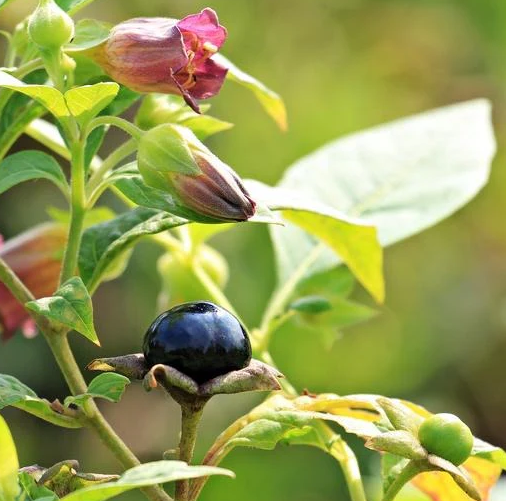
Deadly Nightshade’s history is both intriguing and dark, having been used for various purposes over the centuries. Here are a few notable historical applications:
Ancient Rome & Greece
Deadly Nightshade was the silent weapon of choice for assassins and conspirators throughout history. In ancient Rome, warriors dipped arrows in its toxic extracts, transforming them into instruments of swift, untraceable death. Even emperors and political rivals fell victim to this botanical assassin’s undetectable, fast-acting poison—proof that nature’s deadliest chemistry has shaped human conflict for millennia.
Medieval Witchcraft & Sorcery
Medieval witches allegedly brewed Deadly Nightshade into hallucinogenic “flying ointments,” using its mind-warping toxins to induce trance-like visions. This dark association cemented the plant’s reputation as a tool of the occult, blurring the line between poison and mystical experience. Even today, its role in witch folklore remains a haunting chapter in its history.
Renaissance Beauty Practices
The name “belladonna” (Italian for “beautiful lady”) reveals a deadly beauty secret— Renaissance women dabbed its extracts in their eyes to create an alluring, pupil-dilating gaze. But this risky cosmetic alchemy came at a price: blurred vision, racing heartbeats, and the ever-present threat of fatal poisoning. A haunting reminder that historical ideals of beauty often walked hand-in-hand with danger.
Modern Medicine
Deadly Nightshade’s toxins now heal under science’s careful hand— its atropine soothes muscle spasms, calms motion sickness, and sharpens eye exams through precise pupil dilation. What was once poison is now prescription, proving nature’s deadliest chemistry can save lives when mastered. Yet this Jekyll-and-Hyde plant still demands respect—its therapeutic window remains razor-thin.
Symptoms of Deadly Nightshade Poisoning
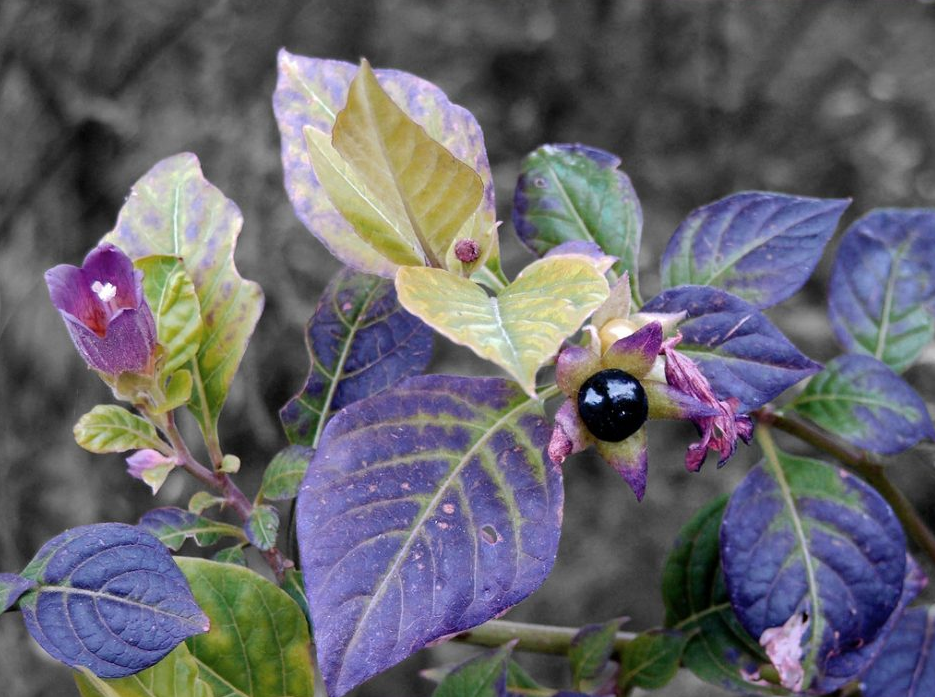
Just a few berries of Deadly Nightshade can kill— with symptoms raging from dry mouth and hallucinations to seizures and fatal heart failure. Survival hinges on dosage, body weight, and how fast treatment begins, making every case a race against time.
Mild Symptoms: A single bite triggers a nightmare cascade—cottonmouth, tunnel vision, blown pupils, hammering heartbeat, and spiraling disorientation—as the body betrays itself.
Severe Symptoms: The poison’s final act unleashes waking nightmares—twisted visions, violent seizures, locked limbs, and suffocating stillness before the abyss of coma.
Fatal Symptoms: The end comes with silent lungs and frozen limbs—a total systemic shutdown as the poison claims its final victory.
Who is Most at Risk?
- Children – Attracted to its glossy, cherry-like berries, they’re most vulnerable to accidental poisoning.
- Foragers & Herbalists – Misidentification as edible plants (e.g., wild cherries) or improper dosing in remedies can be deadly.
- Recreational Drug Users – Those experimenting with its hallucinogenic properties risk seizures, coma, or fatal overdose.
Can Deadly Nightshade Be Used Safely?
- Strict Medical Supervision – Only purified, laboratory-extracted alkaloids (like atropine) should be used, exclusively administered by healthcare professionals in controlled doses.
- Never Self-Experiment – Home remedies, teas, or DIY uses with any plant parts are life-threateningly dangerous due to unpredictable potency.
- Secure Handling – If grown for research, wear gloves/masks and keep it locked away from children/pets—even dried leaves remain toxic.
- Education First – Foragers, gardeners, and herbalists must learn to identify and avoid it (e.g., distinguish berries from edible nightshades like blueberries).
How to Identify Deadly Nightshade
- Distinctive Berries – Look for glossy, deep purple-to-black berries (5-10mm) in green, star-shaped husks—never round like edible blueberries.
- Bell-Shaped Flowers – Identifiable by its drooping, violet-brown or purple flowers with five fused petals and a subtle, unpleasant odor.
- Leaves & Growth – Oval, pointed leaves (up to 20cm) in uneven pairs; grows 1-1.5m tall in shady, nitrogen-rich soil (hedgerows, woodlands).
- Key Confusion Plants – Avoid mistaking it for:
- Black cherries (grow on trees, no husks)
- Edible nightshades (e.g., bittersweet nightshade has red berries)
- Wild blueberries (smaller, dusty-blue, with crown marks).
Should You Grow Deadly Nightshade?
1. Extreme Caution Required – Only experienced botanists or researchers should consider cultivating Deadly Nightshade, and even then under strict safety protocols (gloves, tools, and secure, labeled enclosures).
2. High Risk Outweighs Reward – For most gardeners, the lethal hazards (to children, pets, or wildlife) and legal restrictions in some regions make it not worth the danger. Even dried plant material remains toxic.
Final Thoughts
Deadly Nightshade mesmerizes with its lethal beauty—a botanical paradox of healing and horror. Though steeped in history and medicine, its razor-thin safety margin demands absolute respect; one misstep can turn remedy to ruin. Admire from afar— its power belongs solely to trained professionals, not curious hands.

