
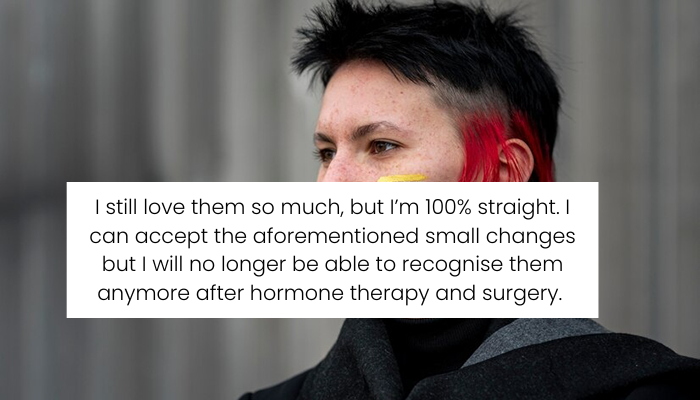
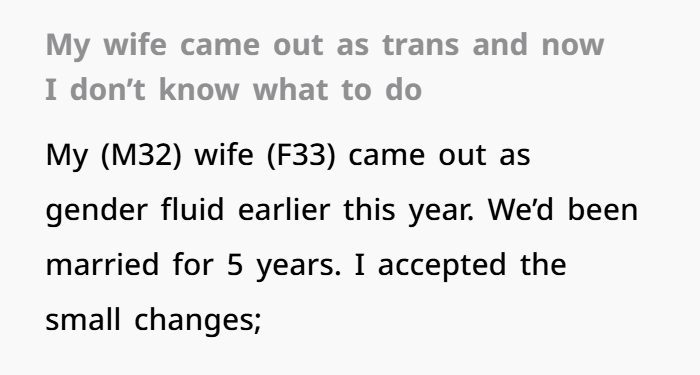
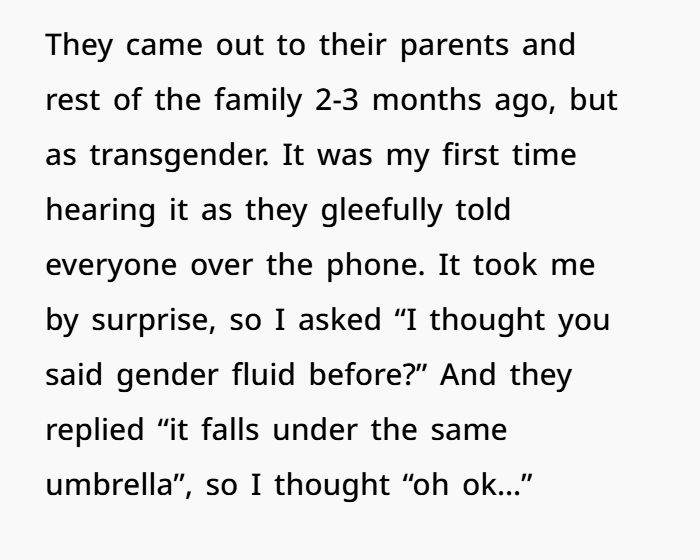
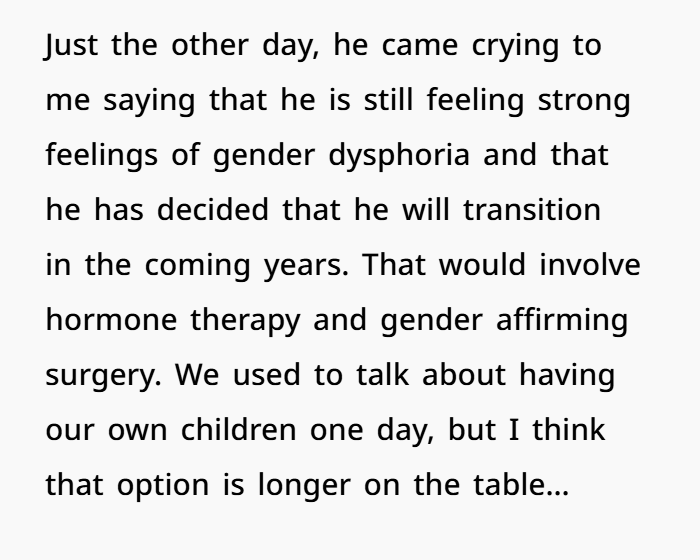
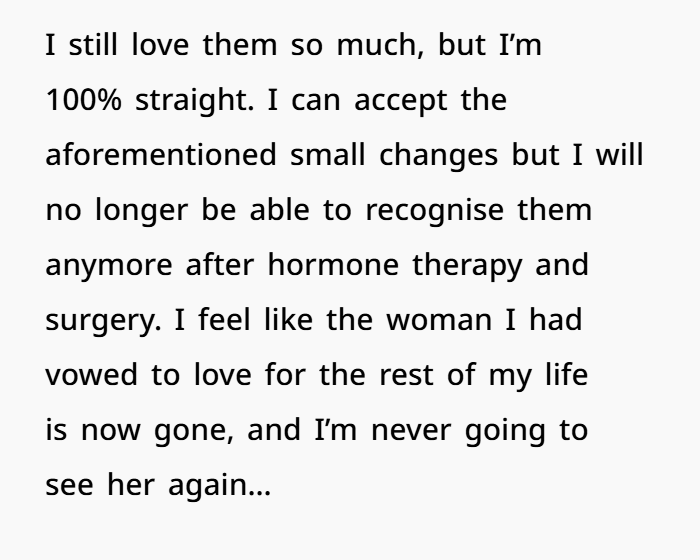
In a deeply personal account, a 32-year-old man opens up about the emotional rollercoaster of navigating his marriage after his wife of five years came out as gender fluid and later, as a transgender man. What began with subtle changes like adopting gender-neutral clothing and a deepening voice has now evolved into a much more profound reality: his partner has decided to begin hormone therapy and pursue gender-affirming surgery.
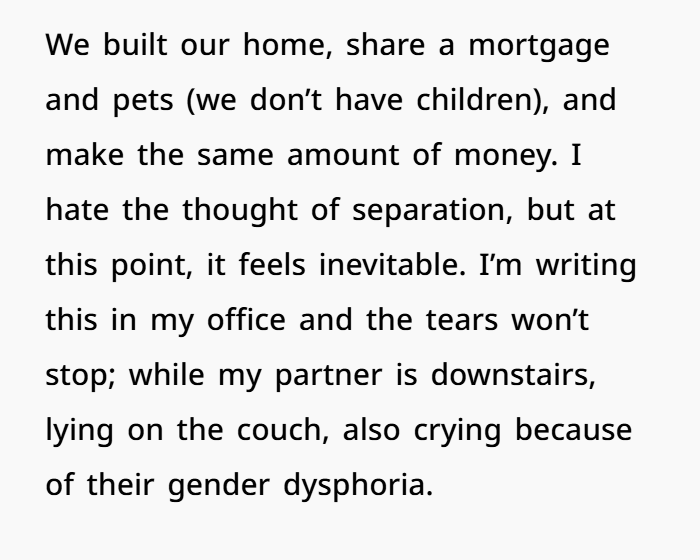
As someone who identifies as heterosexual, he finds himself facing incredibly difficult questions about love, identity, and what it means to stay in a relationship when your partner’s appearance and identity are changing so drastically. Their shared life a home, a mortgage, beloved pets now sits at a painful crossroads.
Both partners are in the midst of emotional upheaval. He grieves the loss of the woman he married, while his partner struggles with the intense mental and emotional weight of gender dysphoria. This isn’t a story with easy answers, but rather an honest exploration of how relationships evolve when one person’s truth changes everything.

When she came out as gender fluid earlier this year, he embraced the small changes, her shift to more gender-neutral clothing, cutting her hair short, and choosing to go without makeup.


The Intersection of Gender Transition and Marital Dynamics
Understanding Gender Dysphoria and Its Impact on Relationships
Gender dysphoria, defined as deep distress stemming from a misalignment between an individual’s assigned gender at birth and their internal sense of gender, can significantly impact mental health. The Mayo Clinic notes that those experiencing gender dysphoria often face anxiety, depression, and difficulties in personal relationships. Within romantic partnerships, the emotional toll of gender dysphoria and the transition process can lead to reduced intimacy and emotional distance, as both partners adjust to evolving identities.
Legal Considerations in Marriages Involving Gender Transition
Navigating marriage during or after a gender transition introduces complex legal considerations. In the UK, the Gender Recognition Act 2004 allows transgender individuals to legally change their gender, though early versions of the law required the annulment of existing marriages. While legal reforms have since reduced this burden, transitioning can still affect divorce proceedings in subtle ways. Experts caution that despite legal protections, social stigma and workplace discrimination may indirectly influence outcomes in court or in negotiations.
Emotional and Psychological Challenges for Partners
The emotional experience of partners in relationships undergoing a gender transition is multifaceted. Common reactions include grief, confusion, and a sense of identity loss. According to Psychology Today, even in relationships grounded in support and love, partners may feel destabilized—struggling with the feeling that their shared history has shifted. These challenges highlight the need for open dialogue, patience, and, in many cases, professional counseling to support both individuals through the transition.
Support Systems and Coping Mechanisms
Building and accessing supportive networks is vital for couples navigating gender transition. Online forums like Reddit’s r/mypartneristrans provide space for partners to connect and share experiences, while gender-affirming therapists can help individuals and couples work through the emotional and logistical complexities of transition. Education also plays a key role helping both partners deepen their understanding of gender identity and better support one another through the process.
Reader Response
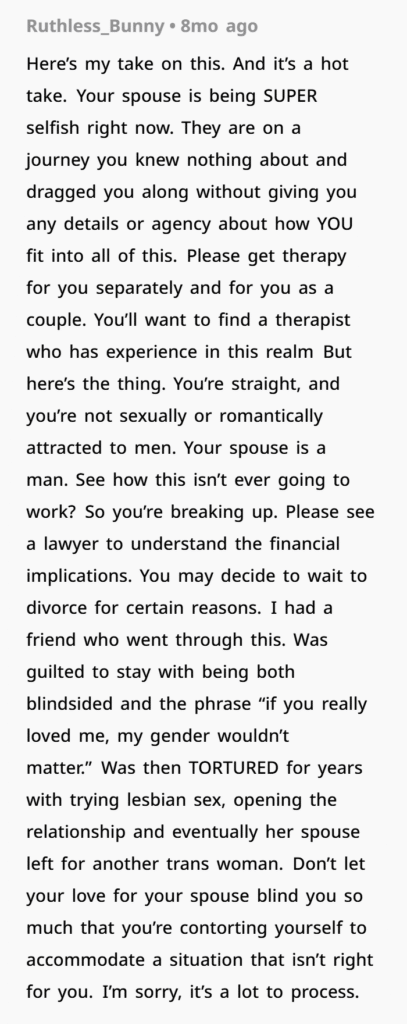
In community discussions around these topics, such as those found in online forums and comment sections, opinions often vary. In one case, many readers expressed skepticism about the future of a marriage affected by transition, encouraging one partner to prioritize self-care and consider moving on. However, every relationship is unique, and with communication, empathy, and professional support, some couples do find new ways to thrive together.



The experience of a spouse transitioning their gender brings with it a complex blend of emotional, legal, and social challenges. For couples navigating this life-changing journey, compassion, honest communication, and a willingness to face difficult truths are essential. While the future may involve painful decisions, the pursuit of authenticity both individually and together can lead to personal growth and, in some cases, the evolution of the relationship into a new, redefined form.

