
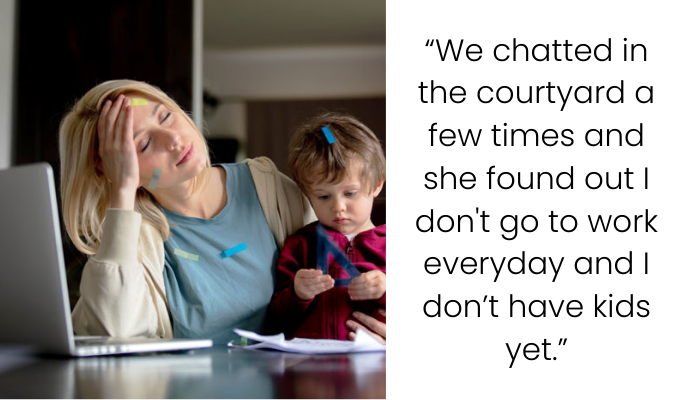
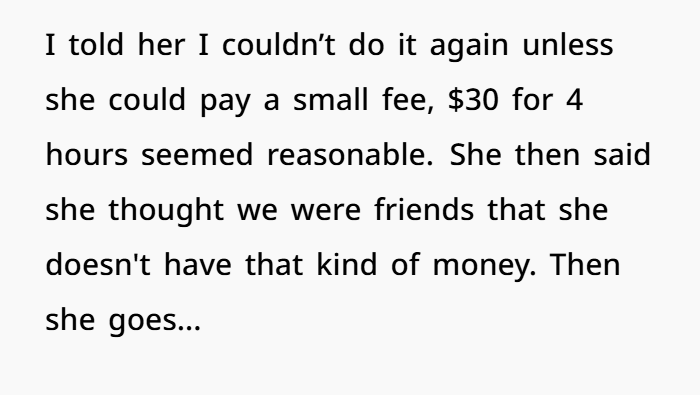
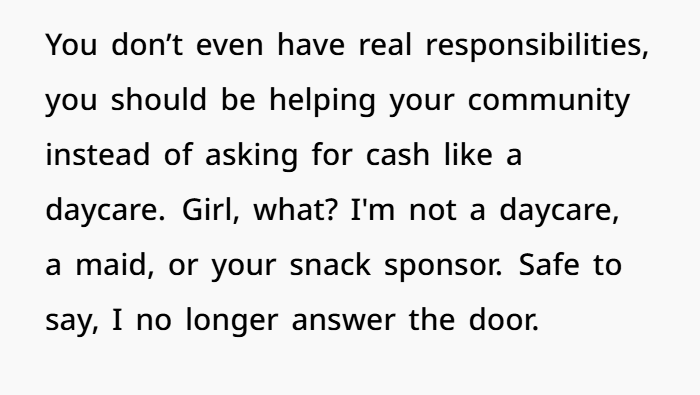
In this all too-relatable story of boundaries pushed too far, a 32-year-old woman shares a jaw-dropping encounter with a neighbor from her apartment complex. What started as a friendly acquaintance quickly devolved into entitlement when the neighbor assumed she was owed free childcare—simply because the woman works from home and doesn’t have children of her own.
After hesitantly agreeing to watch two wild children for four hours, she received no gratitude, no instructions, and was casually informed that this would now be a weekly expectation—completely unpaid. When she requested a reasonable $30 for her time, the neighbor snapped, invoking the idea of “community support” as a way to guilt her into compliance.
While it’s true that parenting often requires help, there’s a right way—and a respectful way—to seek support.

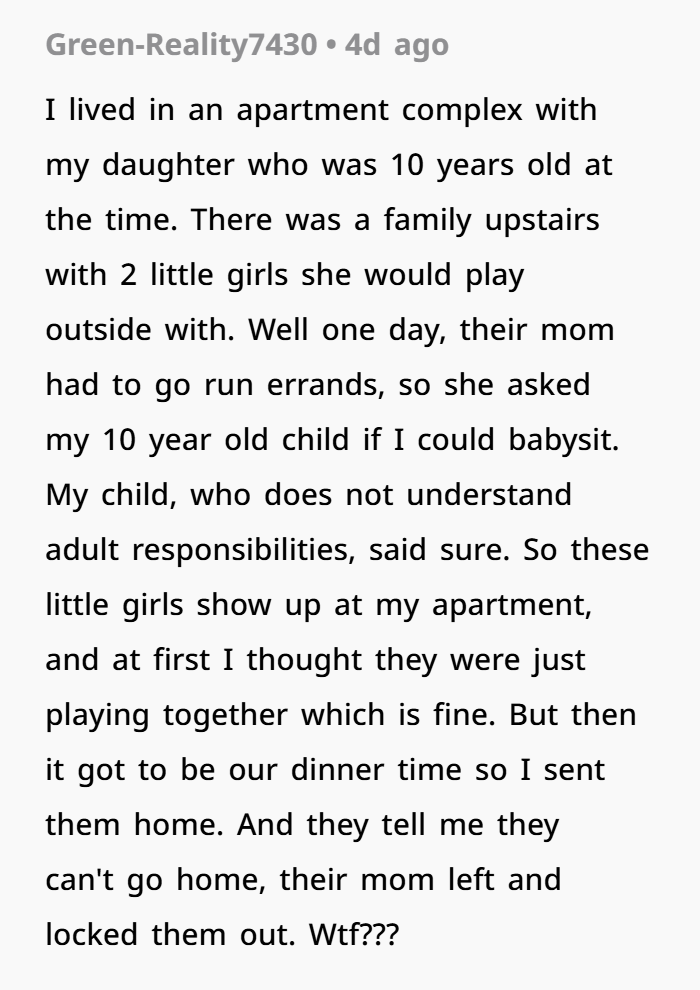
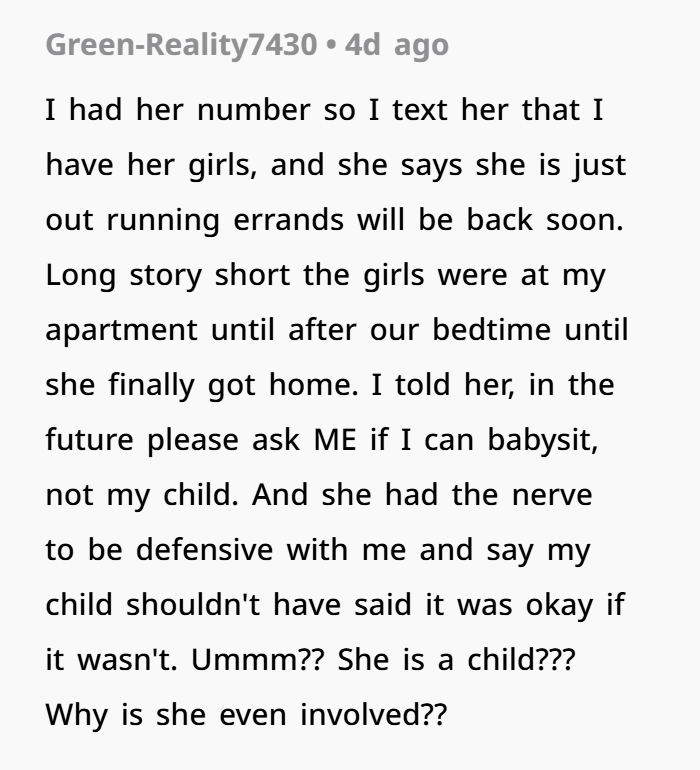
In this story, a woman moved into a small apartment complex with her two children and soon crossed paths with the author.

Unpaid Babysitting: Where Boundaries End and Legal Issues Begin

When Neighborly Favors Cross the Line: Boundaries, Legalities, and Unpaid Childcare
In the shared spaces of communal living, neighborly relationships often swing between warmth and unwelcome imposition. One such case where a neighbor expects routine, unpaid childcare illustrates the fine line between genuine community support and an overstep of personal boundaries. Beyond the emotional toll, these situations raise important questions about legal responsibilities and tenant rights.
The Legal Landscape of Informal Childcare
Informal childcare typically involving unpaid, non-professional caregiving among friends or neighbors is common in close-knit communities. According to ChildCare.gov, most states don’t require licensing for in-home caregivers who occasionally look after children from a single family. However, when the arrangement becomes frequent or involves multiple families, it may fall under state regulatory requirements.
The Fair Labor Standards Act (FLSA) further complicates matters. It states that domestic workers, including babysitters, are generally entitled to minimum wage and overtime pay unless classified as “casual” babysitters. If the care provided is regular and directly supports a parent’s ability to work, the caregiver might legally qualify as a domestic service employee, requiring proper compensation.
Rental Property Rules and Tenant Rights
Tenants offering frequent childcare services from a rental unit may also encounter issues with their lease. Many rental agreements contain clauses that prohibit business operations within the property. While the occasional babysitting favor is unlikely to cause concern, regularly providing childcare especially for compensation could be interpreted as running a business, potentially violating the lease and triggering landlord intervention.
Navigating these situations requires a careful blend of clear communication, knowledge of your rights, and an understanding of the legal implications. Being neighborly shouldn’t come at the cost of being taken advantage of.

Moreover, the presence of non-resident children on the property can lead to complications, such as exceeding occupancy limits and generating noise complaints both of which may disrupt the living experience of other tenants. For this reason, it’s vital that tenants carefully review their lease agreements and consult with landlords to ensure full compliance with property rules and community regulations.
Setting Boundaries and Communicating Expectations
Expecting someone to provide free childcare simply because they work from home or don’t have children of their own is a clear overstep an assumption rooted in entitlement. Establishing firm boundaries is not only reasonable but necessary to prevent exploitation.
According to a FiveThirtyEight survey, 70.7% of respondents believe open communication is key to resolving personal conflicts of this nature. A direct and respectful conversation with the neighbor to express concerns and clarify expectations can often defuse the situation before it escalates.
However, if the issue persists despite honest communication, it’s wise to document all interactions. Bringing the matter to property management or, in more serious cases, seeking legal advice can help protect your rights and ensure the situation is addressed appropriately.
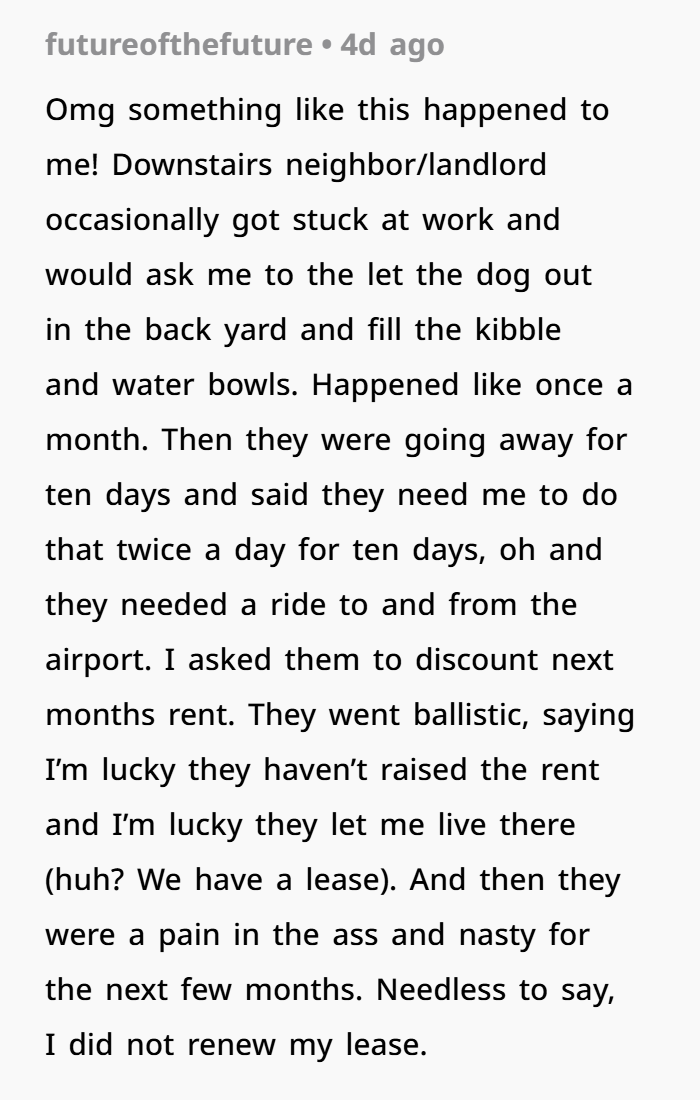
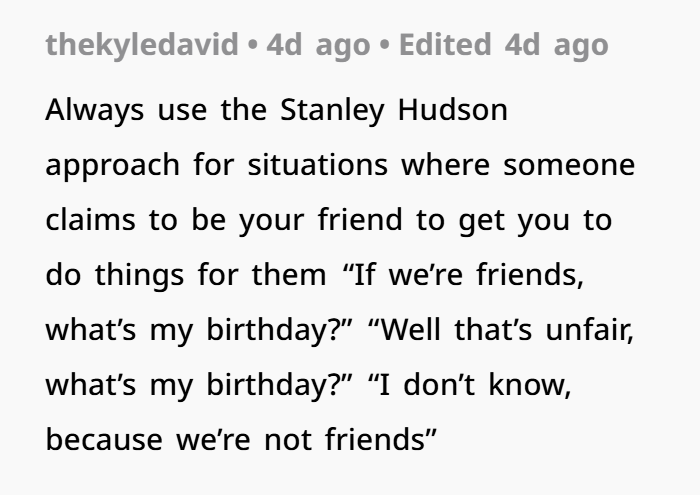
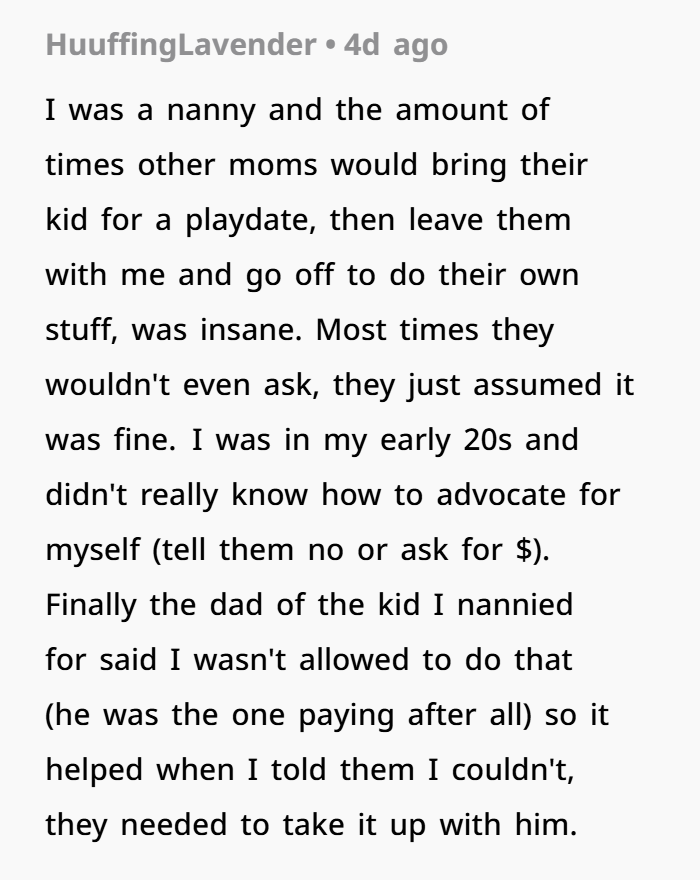
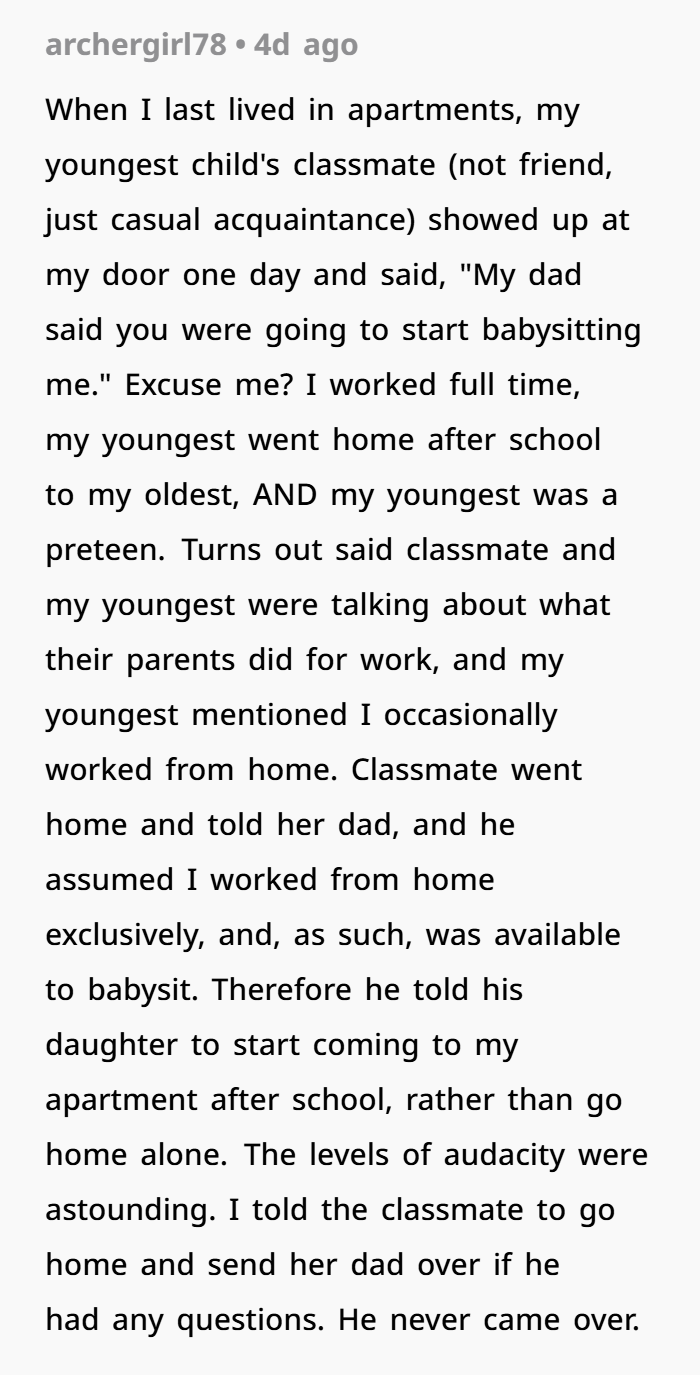
Online, many voiced support for the author’s decision to set firm boundaries. Commenters described the neighbor’s behavior as entitled, manipulative, and even suspicious, reinforcing the importance of advocating for one’s time, space, and well-being.
While community support plays an important role in shared living environments, it should never come at the cost of personal boundaries or legal responsibilities. Expecting regular, unpaid childcare especially without clear consent can infringe on individual rights and may breach legal or tenancy agreements. Navigating these situations requires open communication, awareness of the legal framework, and a firm commitment to personal boundaries to foster respectful and compliant neighborly relationships.

