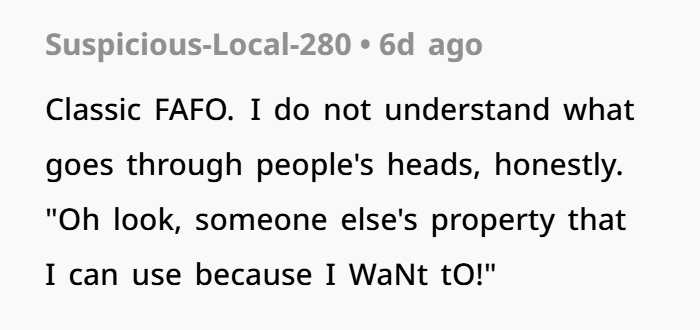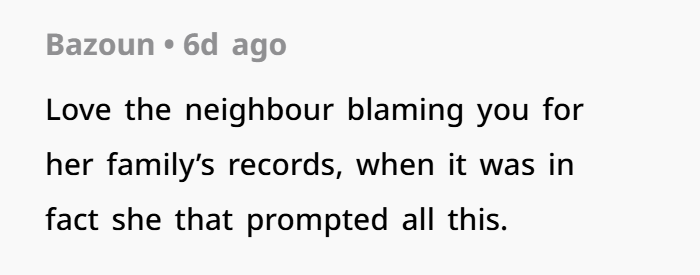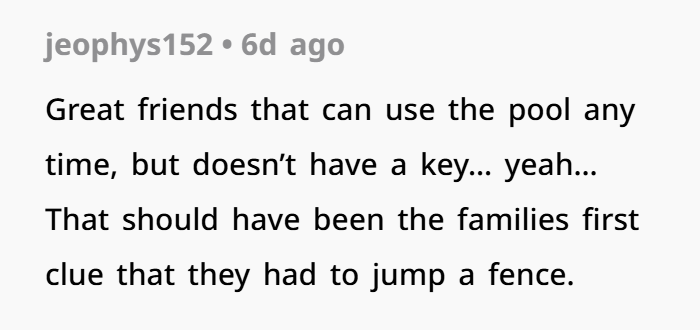
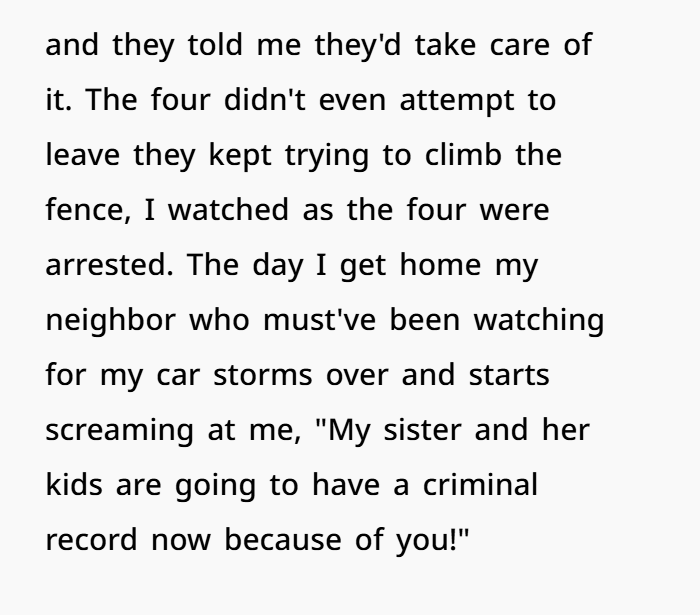
What followed was a startling mix of audacity and entitlement. Upon returning home, the homeowner was confronted by the neighbor whose relatives had been caught trespassing. Rather than expressing remorse, she lashed out, blaming the homeowner for the legal consequences now facing her sister and nieces.
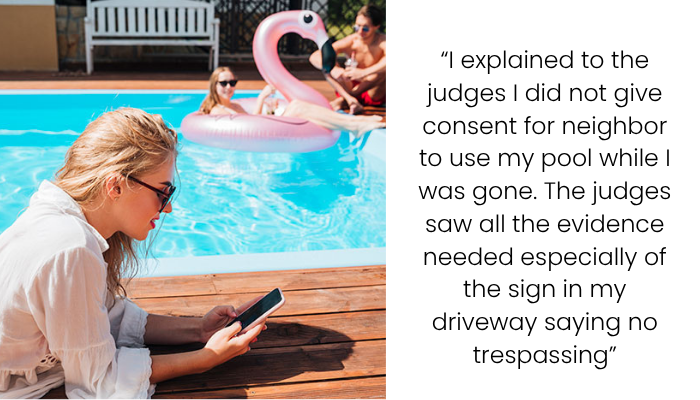
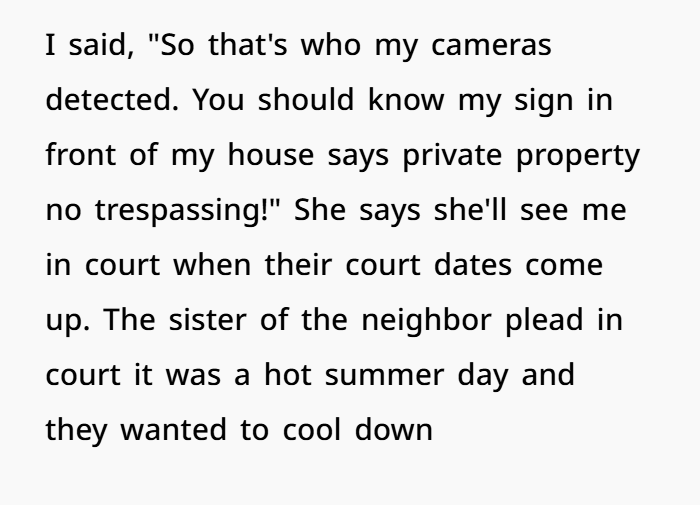
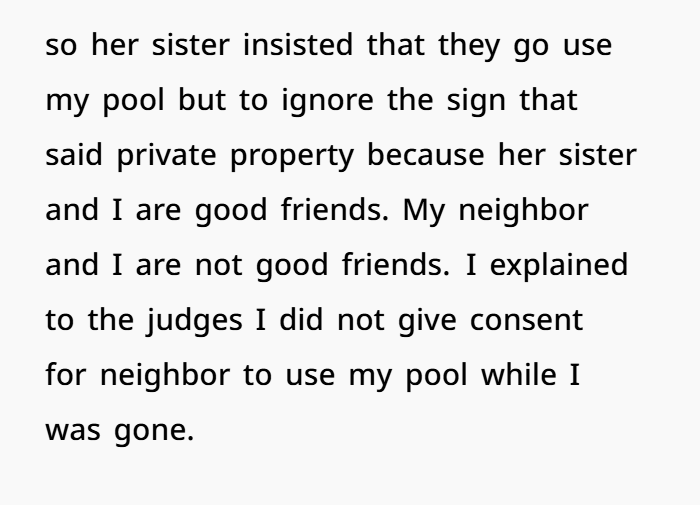
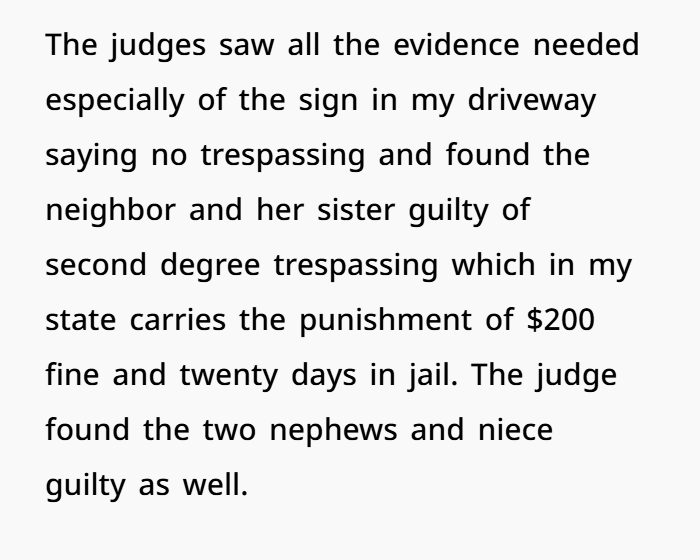
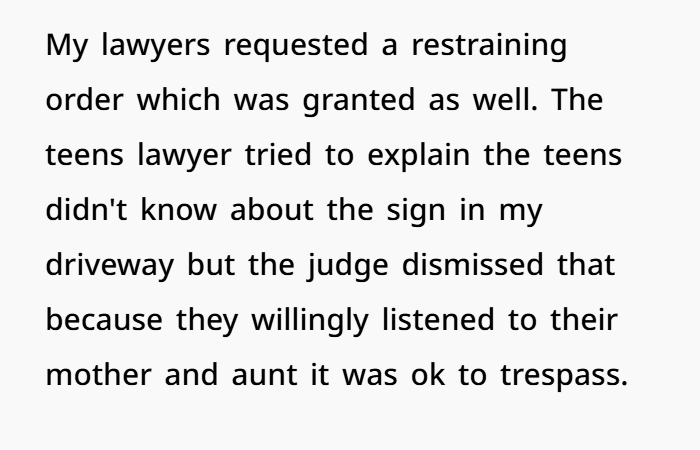
In court, the trespassers claimed they were merely trying to escape the summer heat and insisted they had been told by the neighbor to disregard the clearly posted “No Trespassing” signs. However, the homeowner’s security footage, coupled with prominent signage and the lack of any permission, told a very different story. The court found the group guilty of second-degree trespassing. The adult received fines and jail time, while the teens were also held accountable for their actions. To further ensure the homeowner’s safety and peace of mind, the court granted a restraining order against the offenders.
Having a pool is a luxury not an open invitation.

When a woman discovered a family trying to use her private pool without permission, she took swift action and made sure they learned a hard lesson.

Trespassing, Liability, and the Right to Private Property: When a Pool Party Becomes a Criminal Case
When a homeowner discovered a neighbor’s family attempting to use her private pool without permission, she didn’t just stop them she made sure the law backed her up.
This unsettling incident shines a spotlight on a fundamental principle of property law: the right to control access to one’s private space. It’s also a reminder that even seemingly harmless actions like sneaking into someone’s backyard pool can carry serious legal consequences when boundaries are ignored.
What Happened?
Despite clearly posted “Private Property” and “No Trespassing” signs and a secured fence, a woman’s neighbors sent an adult and three teens onto her property to use her pool while she was away. Thanks to motion-triggered security cameras, she was alerted in real time and contacted the authorities. The trespassers were caught and arrested on the spot.
Legal Context: What Is Second-Degree Trespassing?
Under U.S. law, trespassing involves entering another person’s property without permission. In this case, the offenders were charged with second-degree trespassing, which typically applies when there is no intent to commit another crime (such as theft or vandalism), but the entry is still unauthorized.
Because the pool was gated, covered, and posted with signs, the law was clearly on the homeowner’s side. In many states, including North Carolina and Florida, second-degree trespassing can lead to fines of several hundred dollars and 20 to 60 days in jail, depending on the court’s discretion. The adult in this case received both, and the teens were also held legally accountable.
The Neighbor’s Response: Entitlement Meets Accountability
What surprised many wasn’t just the act of trespassing but the reaction that followed.
Instead of apologizing, the neighbor angrily confronted the homeowner after the arrests, blaming her for the consequences facing her sister and her sister’s children. In court, the defense claimed they were “just trying to cool off” and had been told to ignore the signs.
However, video evidence, visible warnings, and a locked gate made it clear this wasn’t a misunderstanding, it was a willful violation. The court ruled accordingly.
Ethics and Entitlement: A Troubling Trend
This case isn’t just about legality, it’s about ethics. The neighbor encouraged others to ignore someone else’s boundaries, then tried to deflect blame when things went wrong. This kind of behavior reflects moral disengagement, where people justify unethical actions by minimizing the harm or shifting blame.
Expecting access to someone else’s private space especially for convenience shows a disturbing disregard for personal rights and autonomy.
The Power of Modern Security Systems
A key factor in this successful legal outcome was surveillance technology. The homeowner’s cameras provided real-time alerts and clear evidence, which was critical in court.
According to the National Crime Prevention Council, homes equipped with security systems are 300% less likely to experience break-ins or trespassing. In this case, the footage didn’t just stop a crime it sealed the verdict.
Posted signs like “Private Property” and “No Trespassing” also carried legal weight, showing the offenders had been clearly warned. Ignoring those warnings and climbing a locked gate demonstrated full awareness of wrongdoing.
Teenagers and the Law: Who’s Responsible?
When minors are involved in illegal activity, courts often evaluate their age, understanding, and intent. In many jurisdictions, parents or guardians can be held liable, but teenagers old enough to grasp the consequences may face penalties themselves.
The judge rightly rejected the claim that the teens didn’t see the signs. Under the law, “I didn’t know” isn’t a valid defense when a reasonable person in the same situation would have known better.
Restraining Orders: Protecting Homeowners’ Rights
After the incident, the homeowner was granted a restraining order to prevent further contact from the neighbor’s family. These legal tools serve as both a protective measure and a deterrent, signaling that repeated violations will have swift legal consequences.
In this case, the neighbor’s post-arrest confrontation strengthened the need for legal boundaries.
Final Thoughts: Respecting Boundaries Is Non-Negotiable
This story has struck a chord with many because it reflects something deeper than just a legal violation it’s about respect, accountability, and the right to feel safe in your own space.
Having a pool is a privilege not a public service. When someone crosses a boundary, especially after being clearly warned, consequences are not only appropriate they’re necessary.
In the end, the homeowner didn’t just protect her property. She upheld her rights and set a powerful example that trespassing, no matter how casual it may seem, is never okay.