You’ve probably heard the saying, “It takes a village to raise a child.” But for one Reddit user, Left_Time7700, that so-called village quickly began to feel more like a threat than a support system—especially when it came to her mother-in-law’s shocking idea of “help.”
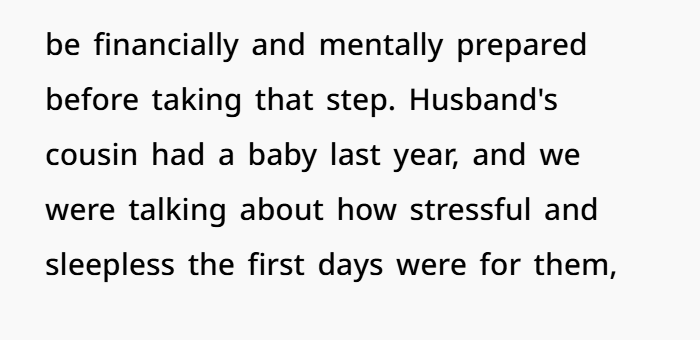
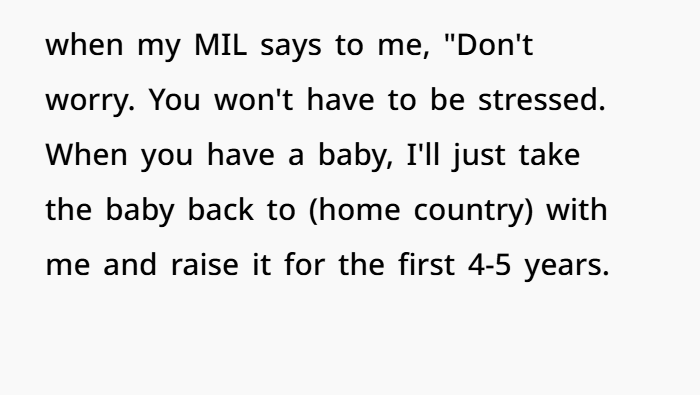
She and her husband are currently childfree by choice, prioritizing their careers, financial goals, and a peaceful home life. But things took a disturbing turn when her mother-in-law started pressuring them to have a baby—then offered an unexpected and unsettling kind of assistance. Her proposal? To take their future child abroad and raise it herself for the first two years.
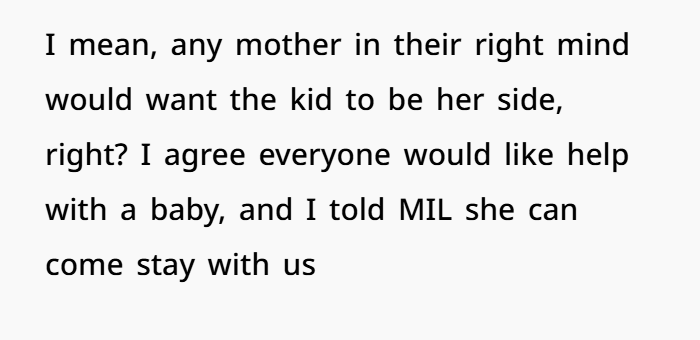
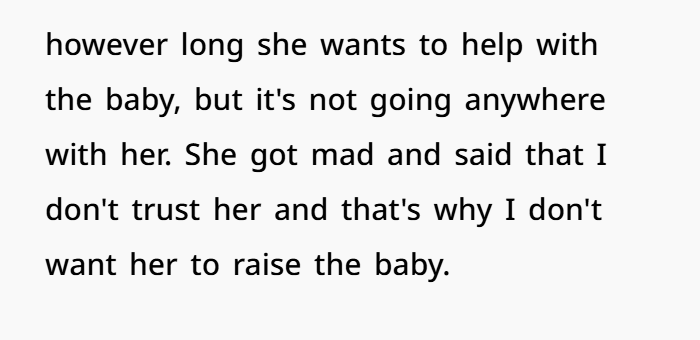
What was meant to be a gesture of support felt more like a complete overstep. The couple was stunned. Instead of relieving the pressures of parenthood, the suggestion sparked fear and frustration. For the wife, the idea of being separated from her child during those foundational years wasn’t supportive—it felt like a forced adoption.
Now, she’s reevaluating the idea of having children altogether. If that’s what help looks like in their family, she’d rather raise a child alone with her husband—or possibly not become a parent at all.
This story sheds light on how overbearing relatives, blurred boundaries, and unresolved family dynamics can deeply impact decisions around parenthood and mental well-being.
While the mother-in-law and daughter-in-law relationship has the potential to be nurturing and respectful, it only works when both sides recognize and honor each other’s boundaries.








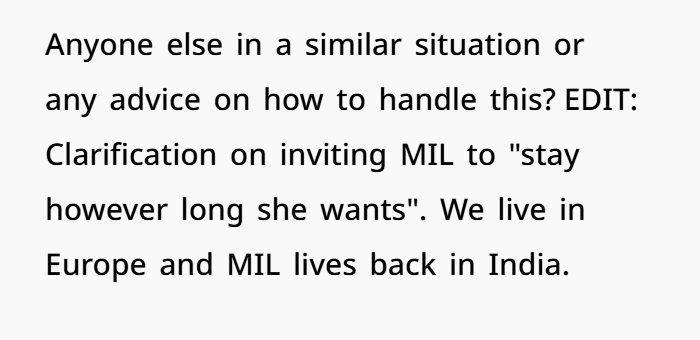

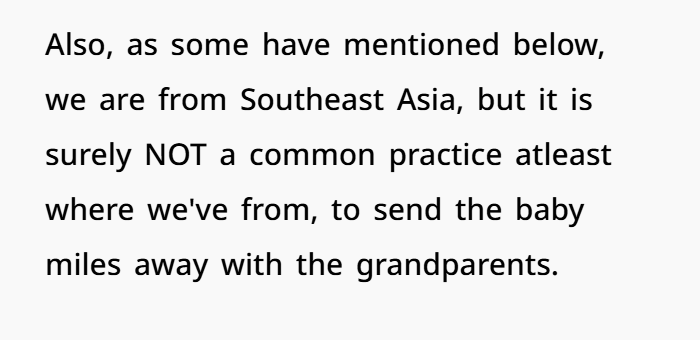

Based on the available information, it’s unclear whether the mother-in-law was deliberately trying to undermine her daughter-in-law’s future parenting role. Some commenters online suggested that the conflict might actually stem from cultural differences in child-rearing expectations rather than intentional overreach.
In many cultures particularly in Indian families it’s quite common for grandparents to play a central role in raising grandchildren. Often, they even travel internationally to help care for newborns. So, from that perspective, the idea of having a child live overseas with grandparents for a time might not seem strange at all. While this arrangement may feel unconventional or even alarming in Western parenting circles, in other parts of the world, it’s considered a normal and trusted form of family support.
Danijela Jokic Vaislay, a writer from Bosnia and Herzegovina who has lived in India for over ten years, weighed in on this dynamic. She explained that many of her European friends, even when overwhelmed by the demands of raising young children, are reluctant to leave their kids with grandparents or extended family. And when they do, the children often remain clingy and anxious sometimes even crying for their mother the entire time.
In contrast, she said, Indian children raised in joint families grow up surrounded by grandparents, aunts, uncles, and cousins. They develop greater independence from their parents early on and are often content to travel, stay, or even live with extended family members without much distress.
“It’s hard to imagine this in Europe,” Vaislay noted. “There, kids get anxious even when their mother goes to the bathroom.”
This situation underscores the importance of cross-cultural understanding when it comes to parenting and family roles. What feels like a boundary violation in one culture might be seen as loving support in another. With mutual respect and open dialogue, the Reddit user and her mother-in-law might still be able to find a parenting approach that honors both cultural traditions and the parents’ personal boundaries.
Still, many readers felt the mother-in-law crossed a line, with some saying her offer sounded more like control than care.