A highly anticipated military parade celebrating the Army’s 250th anniversary has stirred controversy after failing to draw the massive crowds expected, despite a reported price tag of up to $45 million.
The event, revived under former President Trump after years of pushback over costs and comparisons to authoritarian regimes, featured months of planning, historical reenactments, tanks, jets, fireworks, and over 6,000 uniformed service members.
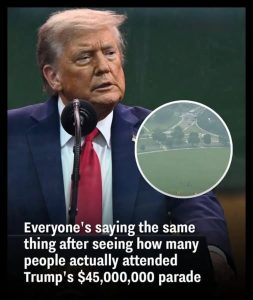
The day concluded with a speech on U.S. military dominance and a dramatic fireworks display. However, while officials claimed 250,000 people attended, aerial images told a different story, showing scattered crowds and fueling criticism online. Many accused organizers of inflating the numbers.
The event’s steep price tag drew sharp scrutiny, especially from those who argued the funds could have better supported military families and veterans. Supporters, however, defended the parade as a morale booster and a patriotic display of strength.
Service members reportedly felt conflicted, proud to participate, yet aware of the political and financial backlash surrounding the spectacle. Critics labeled it political theater, with some counter-protesters gathering under the banner “No Kings” to denounce the event as wasteful and authoritarian.
Media outlets were split in their coverage, and social media amplified both skepticism and support. While local businesses reported mixed economic benefits, the broader debate centered on transparency, spending priorities, and the balance between honoring service and upholding civilian oversight.
Ultimately, the parade reignited questions about how America chooses to celebrate its military, and at what cost.