A 21-year-old college student finds himself at odds with his roommate after an unexpected request disrupts the balance of their shared living situation. He lives in a house with two couples, one of whom is preparing to host a 20th birthday party with around 20 guests. The unusual twist? The birthday host asks him and another male roommate to vacate the house for the night claiming some of her female friends would feel uncomfortable sleeping in the same home as unfamiliar men.
Despite the home being spacious and offering private bedrooms, the request leaves him questioning its fairness and reasonableness.
This situation highlights the challenges of shared living, particularly when personal comfort, social dynamics, and individual rights collide. While the roommate’s desire to create a safe and welcoming environment for her guests is understandable, asking fellow tenants to temporarily give up access to their own home blurs the line between hospitality and overreach.
College house-sharing often comes with a mix of fun, chaos, and the occasional head-scratching moment and this scenario is a perfect example of how conflicting expectations can lead to bigger questions about respect and boundaries.

Residing in a shared home with four others, the author encountered a situation when one housemate decided to host a 20th birthday celebration.



Navigating Shared Living: When Guest Comfort Conflicts with Tenant Rights
Living with roommates especially during the college years can be both rewarding and challenging. Conflicts often arise when personal boundaries, comfort levels, and legal rights intersect. A recent situation highlights this tension: one roommate asked others to vacate their own home for a night to accommodate guests attending her 20th birthday party. While the request may have been made with good intentions, it raises important questions about shared living etiquette and tenant rights.
Understanding Co-Tenant Legal Rights
In most shared housing situations, especially when all roommates are listed on the lease, each tenant has equal rights to access and use the property. No one roommate can dictate terms that infringe on another’s legal right to be in the home. According to Justia, co-tenants cannot evict or exclude each other from the premises without mutual agreement or legal intervention.
Even if a guest feels uneasy around unfamiliar housemates, that discomfort doesn’t give the host the authority to ask others to leave their own residence. While empathy and compromise are crucial in communal living, such requests can easily cross the line into unfair or unreasonable territory.
Guest Policies and Lease Agreements Matter
Most lease agreements include specific clauses regarding guest policies, covering how long visitors may stay and how many can be hosted at once. These rules are designed to prevent situations where guests overstay and inadvertently become unauthorized tenants, which could carry legal and financial risks for everyone on the lease.
Roommates should always refer back to their lease when disputes over guest accommodations arise. If the agreement allows guests under certain conditions, then all housemates must honor those terms. Open communication and respect for established boundaries help ensure a fair and functional living environment for everyone.

Communication and Conflict Resolution
Open, respectful communication is key to resolving conflicts in shared living situations. When a roommate expresses discomfort whether due to guests or other issues it’s important to address the matter as a group and work toward a compromise that honors everyone’s rights and comfort levels. This may include setting clear expectations for guest visits, such as limiting access to certain areas, establishing quiet hours, or requiring advance notice for overnight stays.
When disagreements persist, mediation services often available through universities or local tenant advocacy groups can offer a neutral space for constructive dialogue. These services help roommates reach mutual understanding and create solutions that maintain a peaceful and respectful household dynamic.
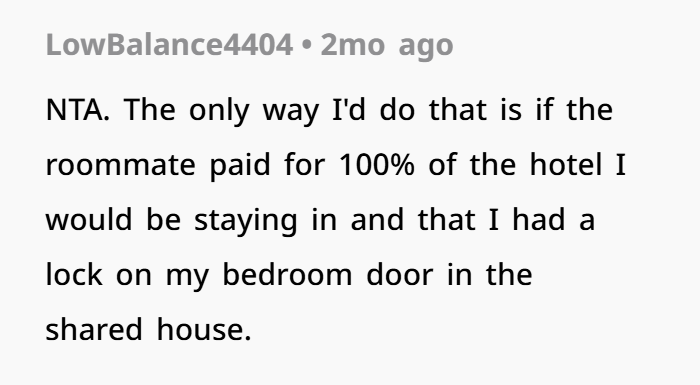
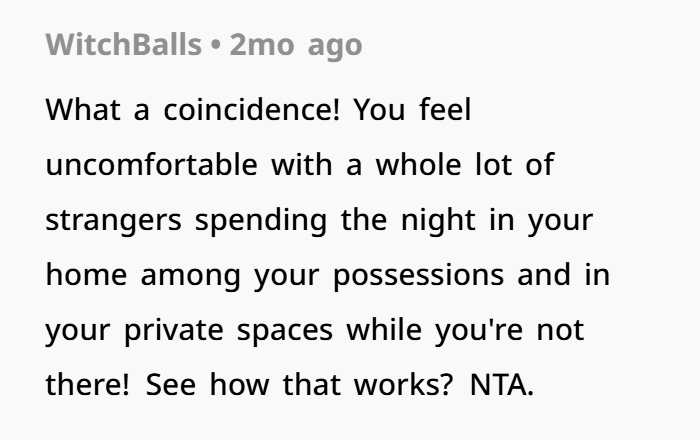
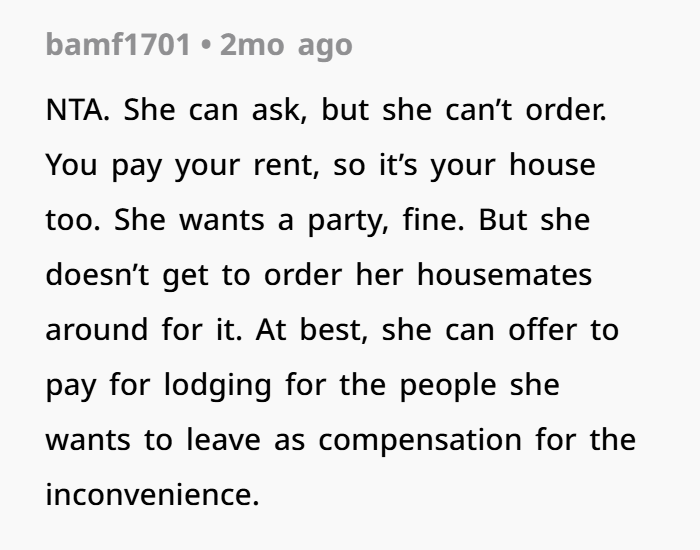
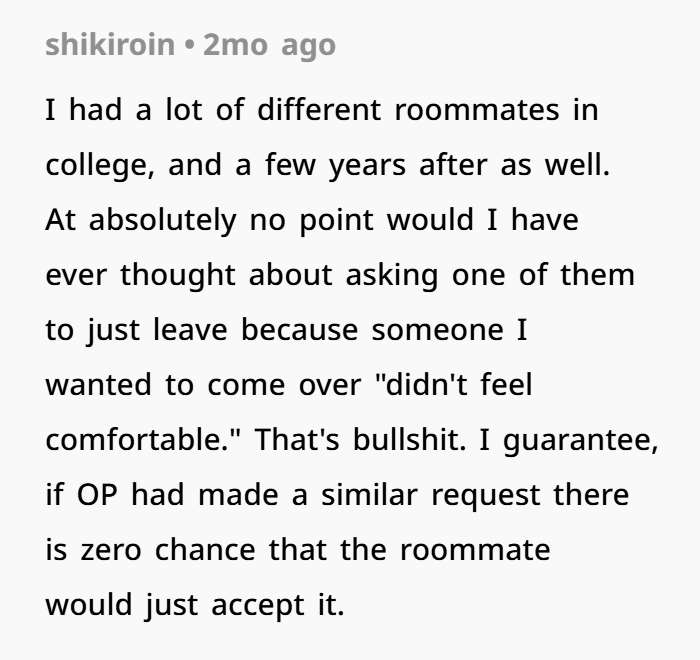
Online, many readers sided with the author, pointing out that the home belongs to him just as much as it does to his roommate. They emphasized that he had no obligation to leave simply to accommodate her guests’ discomfort.

In shared housing, all tenants have equal rights to access and enjoy the home. While hosting guests is a normal part of communal living, it should never come at the cost of another tenant’s comfort or rights. Asking roommates to vacate their own residence to accommodate guests is typically unreasonable and lacks legal justification. Successfully navigating these situations requires open communication, mutual respect, and a clear understanding of the lease agreement.